Showing posts with label biography. Show all posts

Saturday, 6 August 2011

Tolstoy and the Purple Chair: my year of magical reading / Nina Sankovitch

0 comments so far. What do you think?
This is such a good book I have to buy my own copy for keeps after reading the library's copy.The author was a woman busy with work and family who struggled to cope with the too early death of her sister. She decides the therapy required is a year of reading - reading one book a day for a year.

Each chapter begins with a quote from some wise person eg "Words are alive and literature becomes an escape, not from, but into living. Cyril Connolly, The unquiet grave."

Nina blogs a review of each book read and soon readers from all over the world are sharing their
experience with the same book, and recommending others."Those two books - and all the great books I was reading - were about the complexity and entirety of the human experience. About the things we wish to forget and those we want more and more of. About how we react and how we wish we could react. Books are experience, the words of authors proving the solace of love, the fulfillment of family, the torment of war, and the wisdom of memory. Joy and tears, pleasure and pain: everything came to me while I read in my purple chair. I had never sat so still, and yet experienced so much."
Dianne


Share/Save/Bookmark

Saturday, 12 February 2011

A Fortunate Life by A. B. Facey

1 comments so far. What do you think?
This book has been on my "must read" list for a long time, if only for the fact that everyone around me has read it, never mind its canonical status in Australian literature.
A Fortunate Life is an epic yarn of one man's life, simply told, from the horrors of his mistreatment as a child farm worker to the even greater horrors of his experiences at Gallipoli in World War One. Yet the horrors are leavened with stories of humour and great achievement in farming the unforgiving country of rural Western Australia, raising a big family during the Depression and teaching himself to read and write.
A standout section for me was the author's recollection of his six months on a cattle drive through central Western Australia in 1909 when he was not yet 15 years old. This included a harrowing week lost and alone in the bush, surviving on grass and scavenged kangaroo meat, culminating in an encounter with Aboriginal Australians that not only saved his life but altered his perceptions.
Facey genuinely feels "thrilled" looking back on his life, despite the terrible hardships endured, because he relished a challenge and never faltered in his belief at "having a go at something", always "ready to take a risk and try something new. If it worked out, well good, if not I would just try something else." And he had a go at plenty of things: farming, fencing, dam building, boxing, soldiering, droving, house building, tram and truck driving, union delegate ...
A few chapters into this book and I was shaking my head, asking myself "How much more can this bloke stand?" He meets some wonderfully supportive people along the way, yet is also quite up front with the reader regarding those who mistreated or took advantage of him, including his mother who pretty much abandoned him when he was eight years old. I was amazed at his resilience, not just in surviving but in creating such a full and fulfilling life, a life that encompassed some of the iconic periods of modern Australia.
Highly recommended. A must read, that's if you haven't read it already.


Share/Save/Bookmark

Thursday, 3 February 2011

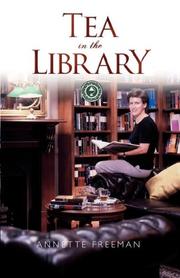
Tea in the Library by Annette Freeman

0 comments so far. What do you think?
If you are interested in the world of books, libraries and bookshops, you'll find this true story quite fascinating. A Sydney lawyer has a "vision" to set up and operate something she believes would fill many needs - as a forum for ideas, a venue for discussions and author talks, besides selling books and serving delicious food.

In 2003 she finds premises to rent in York Street behind the QVB. Little does she know, in the tough world of retailing, how many pitfalls she will encounter - with council regulations, fitting out shelves and cooktops, sourcing ingredients for the kitchen, staff rivalries, book selection, even leaking ceilings and malfunctioning toilets. She studies stock placement and other marketing ploys.

After 18 months however, and after hanging on in the hope of an upturn, the business must close its doors. Fortunately she hasn't left her job in the legal profession. We share all her triumphs and disasters. The story is very "bookish", full of well-informed references to the book world. You are left wondering, how could she have been so idealistic; did she really believe it could ever be successful, competing with discounted books on-line, and large retailers?

The colour plates of the interior of the shop are unattractive, dark and depressing (more a fault of the camera than the surroundings), but all in all it is a short, well-written book, with lots to hold your interest.


Share/Save/Bookmark

Tuesday, 18 January 2011

Ray : Stories of My Life : the autobiography by Ray Martin

0 comments so far. What do you think?
My husband, Bruce, was reading Ray Martin's biography and kept interrupting me to point out the expressive phases that Ray used. I figured if he was enjoying it so much we should recommend it to others. Anyone who lived in Australia during the 1950’s and 60’s would thoroughly enjoy Ray’s history. He even spent some time in the Sutherland Shire before moving with his mother to South Australia.

Our favourite phrases were:
“time sandpapers the jagged edges”
“ipods could send you blind”
“school day dreamtime”
“postcards were like today’s e-mails”
“throwing cameras and microphones at him like spears”
“must not patch grief with platitudes” (from Shakespeare)

Some of the later chapters are also interesting to get an insiders view of Australian television history and development. Even though it is a longish book of 460 pages it was a surprisingly quick read.

Jeanette


Share/Save/Bookmark

Tuesday, 14 December 2010

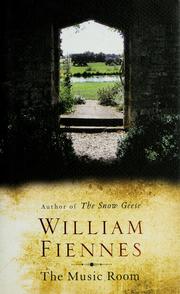
The Music Room by William Fiennes

0 comments so far. What do you think?
Another short and sweet biography just right for holiday reading. The author belongs to the well-known old English family Fiennes and remembers his childhood in the family seat, a moated "castle". The book was recommended to me by a local author for its beautiful use of language. A good example of this is the picture conjured up by "a long sibilance like water on shingle as thousands of barley whiskers brushed the body and wings....", when the glider touches down in the field.

It is essentially the author's recollection of his epileptic older brother Richard, his towering rages and subsequent moments of remorse, his superhuman strength, and love of Leeds United. There is a mellowness about the whole thing, the gentle patience of his parents, the secret doors and passages of the castle, and above all its lyricism, the leit -motifs of birds and water, and the way the word-smith weaves his magic. Interspersed throughout are scientific sections and snippets dealing with the early research into the brain and its electrical impulses, the first EEGs. The rest has a dream-like quality.

Next on my list by the same author is The Snow Geese, which promises to have the same charm.

Janet - Sylvania Library


Share/Save/Bookmark

Monday, 18 October 2010

The last explorer: Hurbert Wilkins Australia’s unknown hero by Simon Nasht

0 comments so far. What do you think?
The last explorer: Hurbert Wilkins Australia’s unknown hero by Simon Nasht


This is the last book I finished and it was immensely interesting. I had never heard of Hubert Wilkins before I picked up this book, yet I now wonder why we don’t all know his name as well as we do Charles Kingsford Smith and Damien Parer or Charles Bean. As he did as much as each of these fellows put together.
Sir Hubert Wilkin's was born in 1888, the last born (lucky thirteenth child) of the very first (white) child, to be born in the fledgling colony of South Australia. Hubert’s father chose land which was on the interior edge of the drought circle, which meant that it was not capable of sustaining life during extended dry periods.
Seeing the struggle of his family and terrible condition of the stock, encouraged him to wonder about the nature of weather, the methods of prediction and how these methods may be improved. He wanted to enable farmers to be forewarned of major climatic events well into the future so they could husband the resources accordingly. His efforts have resulted in the weather prediction services the world has today.
He was totally self educated bar a few years with sporadic mentoring by a local minister. Hubert laid his hand to whatever he thought would be of use to him in attaining his goal…. Permanent weather stations on every continent, including the poles, which shared information freely for the betterment of all.
This led to a great many adventures and near death experiences and with him being a expert in many fledgling sciences including taxonomy, meterology, photography, electronics, aviation, submarines and the development of ligthweight but effective survival equipment for polar regions.
It was exhausting to read but he certainly thrived on the variety of his experiences and knowledge, having led his last Antartic expedition at the age of 69.
Well worth reading!


Share/Save/Bookmark

Friday, 15 October 2010

Shimmer by Basia Bonkowski

0 comments so far. What do you think?
This biography I just could not put down. The author is a Sydney-based writer working in television. Her day by day account of her mother's decline (after a stroke and pneumonia) is told in simple, thoughtful, elegant prose in the present tense, with journeys into her Polish past, and of course, the path we all take when parents die. Other issues she touches upon are Aboriginal dispossession and Aboriginal culture versus European culture. The harrowing emotions experienced during her mother's final two weeks are beautifully expressed - "no one exists outside our fracturing family bubble", as the three siblings make the journey. It is a eulogy for her mother, "Shimmer" represents the chandeliers her mother loved so much. A wise book by a master wordsmith . . . A most satisfying read. Her previous book is also based on personal experience - "Jesse's world: a story of adoption and the global family".

- Sylvania Library


Share/Save/Bookmark

Friday, 27 August 2010

Riding the Black Cockatoo

1 comments so far. What do you think?
I heard about Riding the Black Cockatoo whilst listening to 2BL, Richard Fidler's conversation hour. He was talking to the author John Danalis about the events which overtook his life and resulted in his writing of the book.
I reserved it at my local library and waited, picked it up and was still somewhat reluctant to read it as I knew it would challenge my notions of my own racial prejudices. I eventually picked it up and then couldn't put it down.
The story is essentially about the repatriation of an aboriginal skull which had been one of a miriad of 'collectibles' in the author's housefrom before he was born. He had always just accepted that Mary (as the family named the skull) was there, until one day he told some fellow students about it and their reaction set him on the road to thinking about how to give Mary back to his people.
The journey of self discovery, despair, renewal, reconnection with the natural world and re-evalutaion of his notions of Australian aborignals, which this decision set in motion, is one that was made more poignant as it exposed the ingrained insenitvity of 'white' society to the people who colonisation displaced. It's style is easy to read, and at times quite joyful, but the issues it discusses are not light and will not be quickly forgotten.


Share/Save/Bookmark